

Why carpark expansion and control joints fail, and the cut-out, prep, prime, backer rod and seal method that lasts. A guide for Sydney builders.
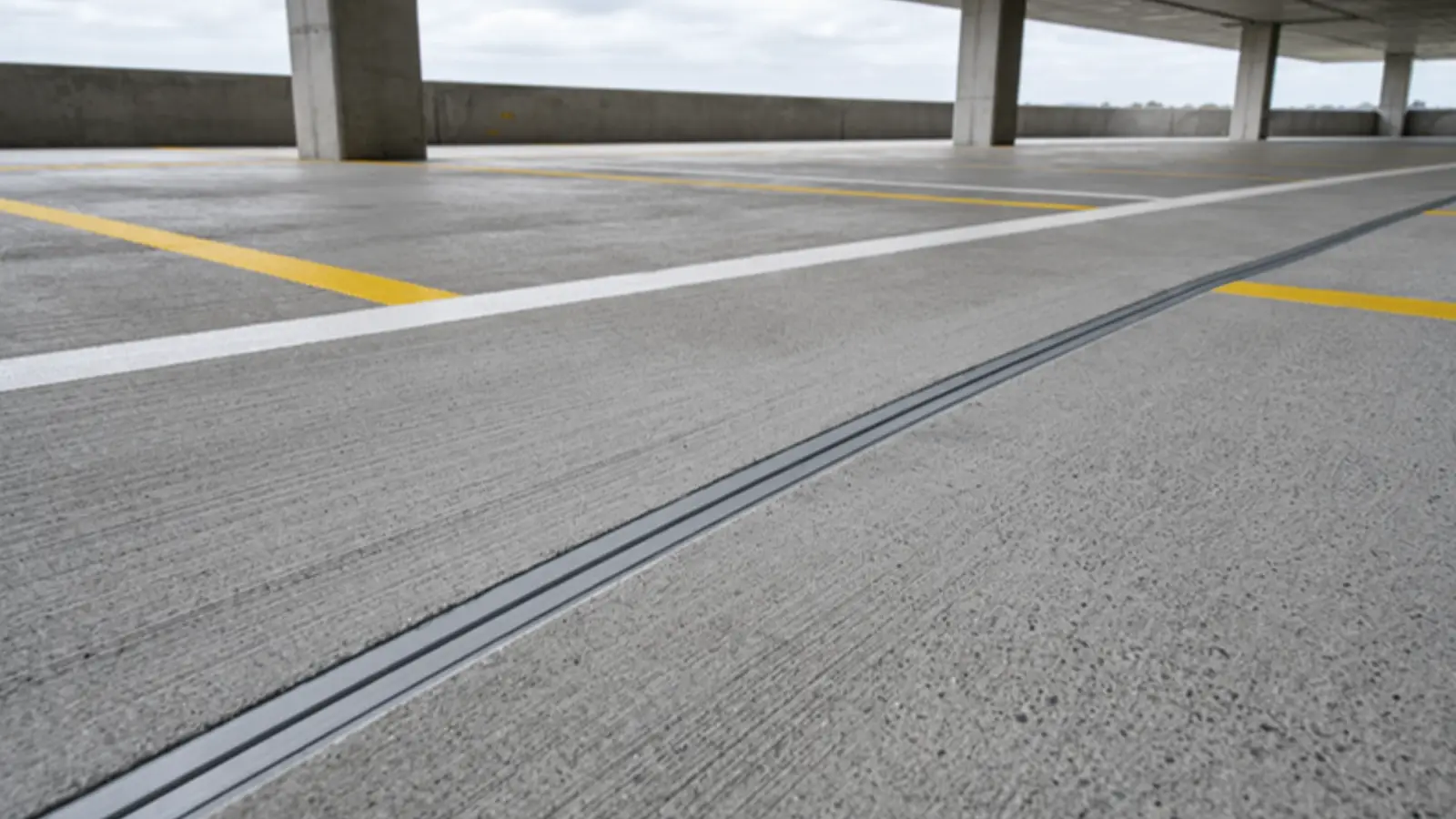
Carpark joints usually fail for one of four reasons: the sealant lost adhesion to the joint walls, the wrong product was used, there was no backer rod, or the concrete edges broke down. A lasting reseal fixes the cause: cut out, repair edges, prepare, prime, install backer rod and seal to the manufacturer's joint geometry.
A joint is a deliberate gap. It lets the slab expand, contract, shrink and deflect without cracking somewhere you didn't plan for. In a carpark or podium, the sealant in that gap is also the thing keeping water, chlorides and grit out of the joint and off the slab edges below. When it fails, water tracks straight through to the soffit, the reinforcement near the joint starts to corrode, and a cheap maintenance item turns into a concrete cancer repair.
That's why a joint that "only leaks a bit" is worth dealing with early. The sealant is a consumable. The slab isn't.
Before anyone prices a reseal, it pays to know what each joint is meant to do. The detail and the product follow from that.
Full-depth breaks between separate structural elements, such as between two slab pours, a ramp and a deck, or a new building and an old one. They take the largest movements and often carry a proprietary joint system or a wide sealant joint with a nosing. If the original detail was a mechanical joint, resealing it with a bead of sealant isn't a like-for-like repair.
Joints between pours, or where the engineer expects the slab to move. Movement is smaller than at an expansion joint but still real, and it cycles daily with temperature.
Saw cuts or formed grooves that tell the slab where to crack as it shrinks. Movement is small, but these are the joints most often left unsealed or sealed with the wrong product, and they take the full wear of wheels and turning tyres.
When you cut out failed sealant, the joint usually tells you why it failed. These are the patterns we see most on Sydney carparks and podiums.
The sealant has peeled cleanly off one or both joint faces. The usual causes are dirty, dusty, damp or laitance-covered joint walls, no primer where the manufacturer calls for one, or sealant applied over old residue. If it came away clean, the prep was the problem.
A low-movement or non-trafficable product in a joint that sees tyres, fuel and daily thermal cycling won't last. Carpark joints need a sealant rated for the joint's expected movement and for trafficked, chemically exposed areas. The engineer's specification or the sealant manufacturer's selection guide should drive the choice, not what's in the ute.
Sealant is meant to stick to two sides of a joint, not three. Without a backer rod or bond-breaker tape at the base, the sealant bonds to the bottom as well, can't stretch freely and tears as the joint opens. Missing backer rod also means the sealant depth is wrong, either too deep to flex or too thin to hold.
Once the concrete edges of a joint spall or crumble, there's nothing sound for new sealant to grip. Wheel impact on a broken arris keeps chipping it back. Resealing over broken edges without repairing them first is one of the most common reasons a reseal fails early.
A durable reseal is mostly preparation. The sealing itself is the quick part.
Remove all old sealant and backer material back to clean concrete, usually by cutting or grinding the joint walls. This is also the point to check for cracks running off the joint; where the engineer wants them treated, they're injected or routed and sealed before the joint is resealed.
Broken arrises are cut back to sound concrete and rebuilt with a repair mortar or an edge nosing system to the specification. On heavily trafficked joints, a nosing gives the sealant a hard, square edge to bond to and protects it from wheel impact.
Joint faces need to be sound, clean, dry and free of laitance, oil and dust. Then prime to the sealant manufacturer's requirements. Primers are product-specific, so the primer and sealant should come from the same system.
A closed-cell backer rod, sized slightly larger than the joint so it sits firm, is pushed to a consistent depth to set the sealant profile. Puncturing the rod during install can cause bubbling in some sealants, so it's placed with a blunt tool, not a screwdriver.
Sealant goes in to the manufacturer's width-to-depth ratio, tooled so it's in full contact with both faces, and finished slightly below the slab surface so tyres don't drag on it. Masking keeps the finish clean.
Traffic return is set by the product's cure, the temperature and the joint size, so it's taken from the manufacturer's data sheet rather than guessed. On a live carpark, the practical answer is to stage the work: seal in bays or levels, barrier off fresh joints, and open each section once it's cured. Quieter trading hours are often the easiest windows in a commercial carpark.
Joint resealing is priced on lineal metres, joint width and type, how much edge repair is needed, access and traffic management, and when the work can happen. Send the joint layout or a marked-up plan, photos of a few typical failed joints, the specification if there is one and any working-hour limits. If you're not sure whether to reseal the failed runs or the whole carpark, photos of the worst and best joints usually answer it.
Usually prep or edges. If the old sealant came off clean, the faces weren't clean, dry or primed. If it failed at broken arrises, the edges weren't rebuilt first. If it tore down the middle, the joint likely had no backer rod or the product couldn't take the movement.
Not for a lasting result. New sealant doesn't bond reliably to old sealant or residue. The old material is cut out back to clean concrete.
It depends on the age and condition of the rest. Where most joints are sound, resealing failed runs makes sense. Where failures are spread across levels, a full program is often cheaper than repeated call-backs. We'll tell you which once we've seen photos or walked it.
Records and a repair register are handed back: where we worked, what was done at each joint, the products used and photos. That's what the client or facility manager will ask you for.
Aussie Concrete Repair is an ACRA member with NSW licence 360636C. We reseal joints, rebuild edges and repair the concrete around them, with a 1-hour callback and itemised quotes within 7 days. Email quotes@aussieconcreterepair.com.au or call 0410 515 509. More on the service: concrete joint sealing.
Send photos, the engineer's spec or drawings, or just the symptoms — whatever you've got. The crew reads it and calls you back. No call centre, no obligation.