

Repair fixes the damage you can see; remediation deals with the cause across the structure. How the terms are used in Sydney engineer reports, and what each means for scope and price.
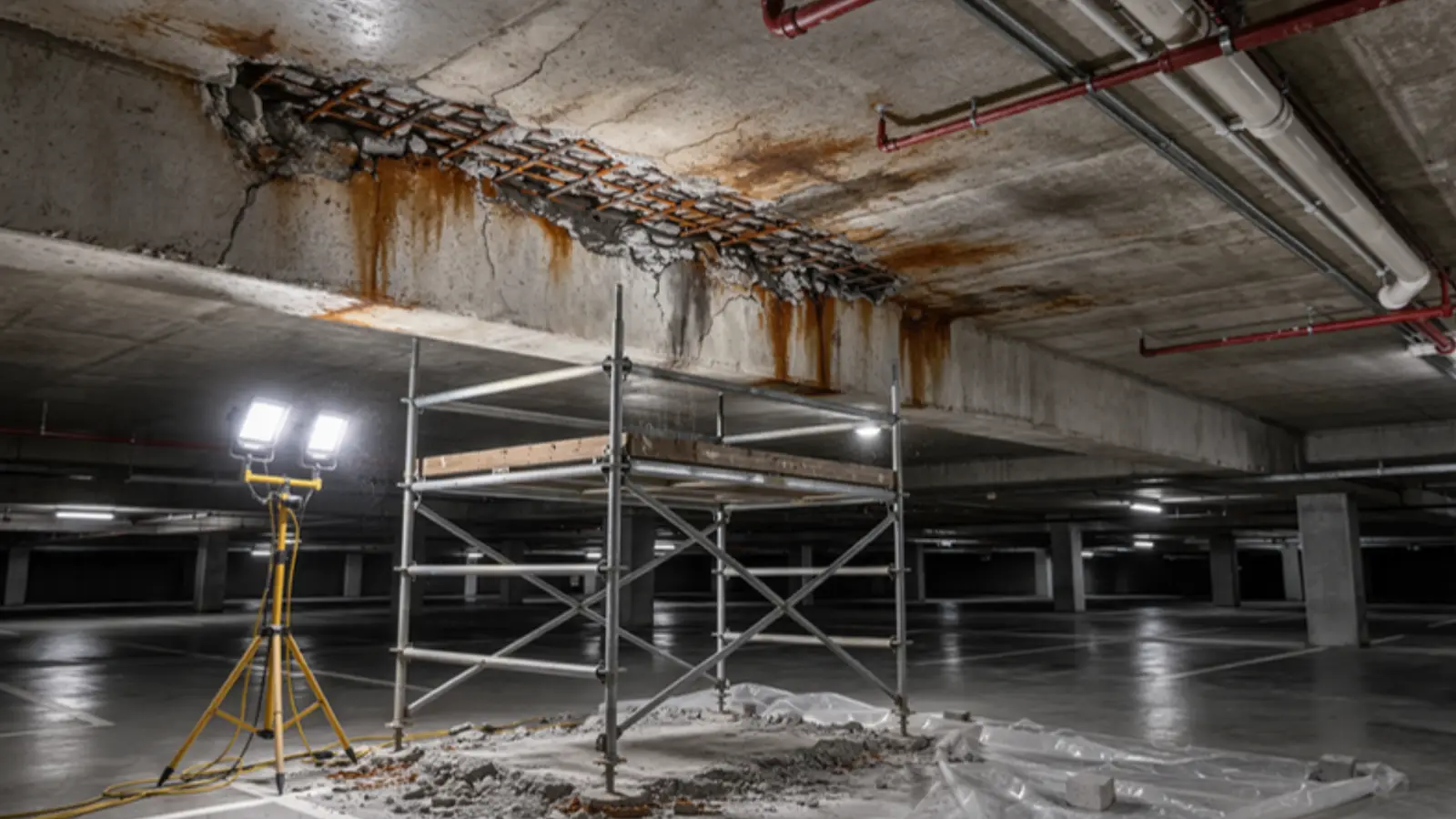
Short answer: in engineer reports, concrete repair usually means fixing specific defects: a spall, a crack, a honeycombed pour. Concrete remediation means the wider program that deals with why the concrete is failing, such as carbonation, chloride attack or low cover, so it doesn't keep failing. A remediation scope normally includes repairs plus protection: coatings, sealers, joint sealing and sometimes cathodic protection, as the engineer specifies.
Repair is location by location. Each defect is marked, broken out or injected, reinstated and recorded. Typical items: concrete cancer and spalling repair, crack injection, form, reo and pour for larger sections, and honeycombing reinstatement.
Remediation looks at the cause. An engineer tests the concrete (carbonation depth, chloride content, cover to steel) and designs a program to stop the next round of damage. That usually adds:
A repair-only quote is cheaper today but leaves the cause in place, so new spalls appear beside the old patches. A remediation scope costs more up front and protects the repairs. If you're comparing quotes, check they price the same scope: one contractor's "remediation" can be another's patch-and-paint.
If the building has repeated spalling on balconies, soffits or carpark slabs, ask the engineer for a remediation specification, not just a list of repairs. It is the document that lets you compare quotes and budget the capital works properly. See our concrete repair cost guide for how repairs are priced.
Send the engineer's report to quotes@aussieconcreterepair.com.au or call 0410 515 509. We price each item against the specification, itemised, within 7 days.
Send photos, the engineer's spec or drawings, or just the symptoms — whatever you've got. The crew reads it and calls you back. No call centre, no obligation.