
Concrete repairs that keep the building running.
Concrete cancer, crack injection, joint sealing, coatings and structural concrete repairs for strata managers, building managers and asset managers across Sydney — built to the engineer's report, staged around residents and tenants, and documented for the building file.
No obligation. We respond within the hour.
Get a quote



A concrete contractor that works around your building, not the other way round.
The concrete repairs that hurt a strata or asset manager are the ones that disrupt residents or tenants, blow the budget halfway through and leave a thin record behind. That's where the real cost lands — not just in the contract.
So we set up to avoid all of that: a clear quote against the engineer's report within 7 days, works staged around the people in the building, and a repair register for the building file and your insurer.
Get a quote →We work around the building
Staged or zoned so residents stay in place and tenants keep trading — works planned around access and hours, not dropped on top of them.
One crew, one point of contact
Concrete cancer, crack injection, joint sealing, coatings and demolition under one contractor — not three trades to coordinate.
We manage safety and access
Exclusion zones, noise, dust and notices handled around residents and tenants — so there's no complaint storm and no WHS incident to write up.
We document for the building file
A repair register — every location numbered, measured and photographed — plus the records your engineer, committee and insurer will want.
Where concrete repairs catch a strata or asset manager — and where we take the load.
A concrete repair project lands back on the manager at four points — the quote, the people in the building, delivery, and the record afterwards. Here's the trap at each step, and how we handle it.
Comparing like with like.
Quotes that don't follow the engineer's report can't be compared, and the real number only shows up once the concrete is opened up.
An itemised quote against the engineer's report within 7 days, priced per location.
Keeping the building livable.
Works that shut access or cause noise without notice trigger complaints — and the fallout lands with you, not the contractor.
Staged, zoned and notified so people stay in place.
Working in an occupied building.
A contractor who needs the building empty can't deliver in a live building — so the works stall or residents have to move.
We work in occupied buildings as standard — that's our normal.
Documenting for the file & insurer.
Thin records mean the next engineer, audit or insurer can't see what was done — and the exposure sits with the owners.
A repair register handed over for the building file.
The wrong contractor doesn't just risk the works — it risks your building.
In an occupied building the contractor's habits land on the residents, the tenants, the budget and the record. The wrong pick doesn't just risk the repair — it risks your relationship with the owners.
Disruption becomes complaints
Works that stop access or run noisy without notice become complaints to you. The cheap contractor who needs the building empty turns out to be the expensive one.
Patches cost more than repairs
Concrete cancer skimmed over comes back, usually bigger. A repair that reaches the steel and is logged location by location costs less over the life of the building.
Thin records become your problem
With no record of what was done where, the next engineer, audit or insurer can't verify the repair — and the exposure stays with the building.
Every concrete repair your building needs.
From spalling balconies to leaking carpark joints — one crew, one quote and one point of contact for the whole engineer's report, staged so residents stay in place.
Delivered. Documented. Residents kept in place.
Concrete repairs we've delivered for owners corporations and strata managers, staged so residents stayed in place and carparks stayed open.
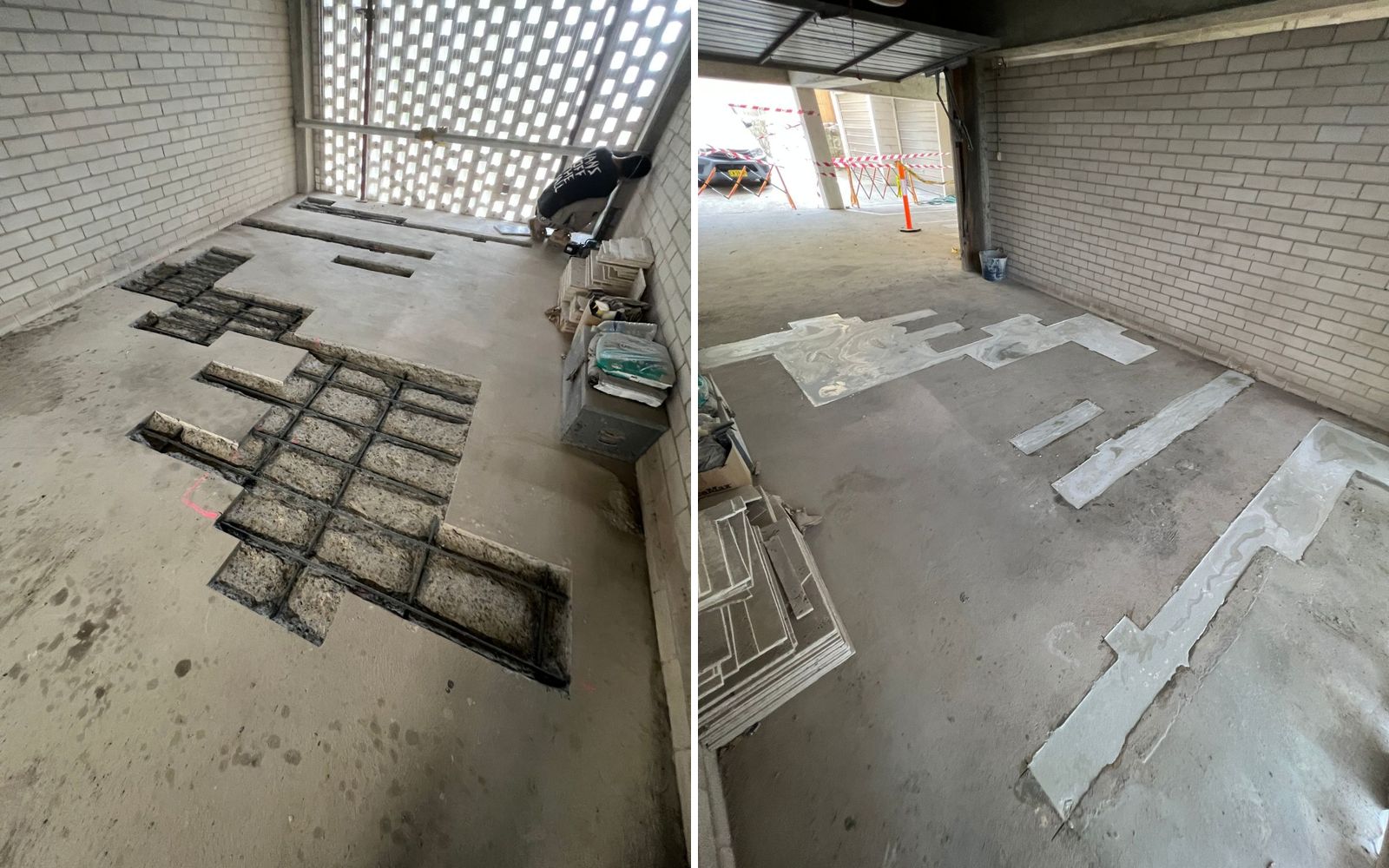
Birrell St — Tamarama
About 1,000 litres of carbonation repairs plus new crash barriers, staged so the carpark stayed open.

Elamang Ave — Kirribilli
Mass cracking and drummy concrete found under magnesite, repaired as one package with the structural engineer.
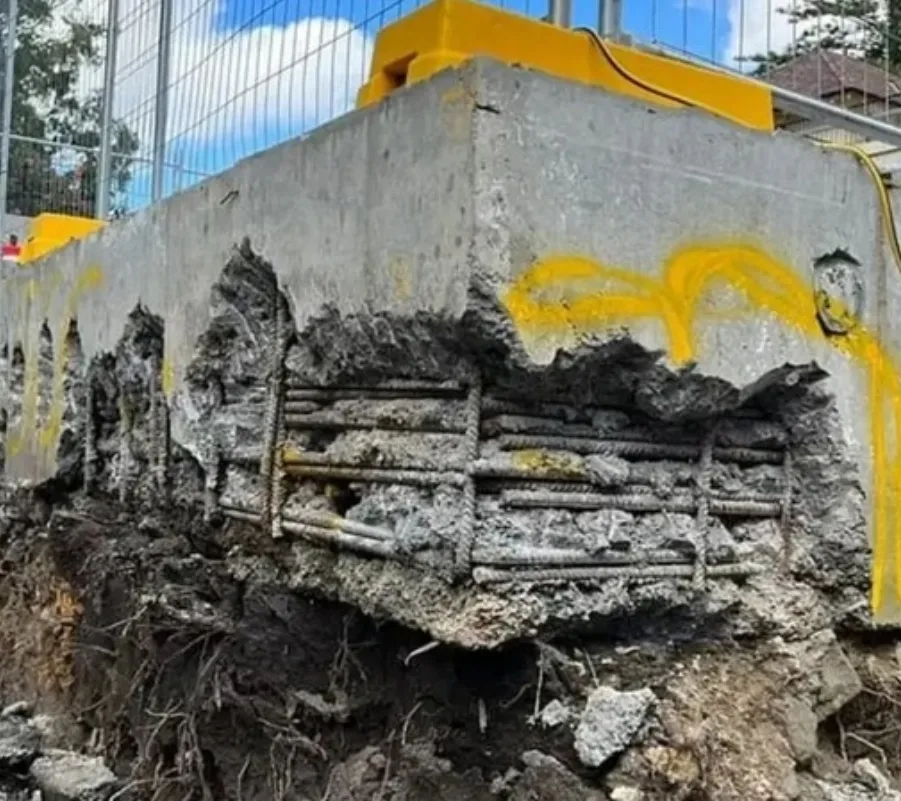
Coolong Rd — Vaucluse
Honeycombed pour and corroding reinforcement broken back, treated, rebuilt and coated.
Aussie Concrete Repair vs a contractor who needs the building empty.
Two contractors can win the same project and run completely differently in an occupied building. Here's the gap that shows up for your residents and tenants — and in what you report to the owners.
The records your engineer, committee and insurer will want — and what to send us.
When the next engineer, audit or insurer asks what was done to the building, you need a record that answers it. We hand the work over already in that shape.
What's in the handover
Compiled as the works run and handed over complete — so your building file is updated by us, not rebuilt by you.
Progress vs program — where we are against the dates, with any risk flagged.
Dated photos by location — before, during and after, every repair numbered.
QA & hold-point records — hold points signed off by the engineer.
Repair register — locations, sizes, depths and materials used.
Warranties — workmanship and manufacturer, collated for the file.
A close-out record — a complete record for the building file.
What to send us
The more of this you have, the faster we can scope or price the work. Don't have it all? The defect and the building are enough to start.
The engineer's report or defect list — if one's been issued.
The building address & access details — who's living or trading where.
Access constraints — when works can and can't happen.
Your insurer or committee requirements — anything the records have to satisfy.
Budget or approval timing — so we can fit the works to your plan.
What concrete repairs cost — for your budget.
Concrete repairs are priced per location, depending on size, depth and access. Typical projects run from $20,000 to $500,000 — send the engineer's report and we'll give you an itemised quote within 7 days.
A single repair, crack run or joint — one crew, one visit.
One service across a balcony stack, carpark or building — e.g. a full crack-injection or joint-sealing scope.
Repair, form-and-pour, joints and coatings across the building in one staged program.
Every scope is transparent and fixed off a confirmed cause — no mystery line items, no “we'll see when we open it up” that turns into an emergency variation you have to explain to ownership.
The work is documented and warrantied in writing. Verify everything.
Most concrete repairs come back because the last contractor patched over the rust instead of treating it. We don't.
We'd rather you check than take our word for it.
From first call to signed-off repairs — no mystery.
We're a fit for some buildings, not all.
This is for you if…
- ✓You manage a strata, commercial or mixed-use building with concrete repairs to do.
- ✓You need works staged around residents or tenants — not a building that has to empty.
- ✓You have an engineer's report, or need the extent confirmed before you budget.
- ✓You need a record of the repairs for the building file, the committee or your insurer.
- ✓You want an itemised quote within 7 days and a start about 2 weeks after award.
Probably not us if…
- —It's a single house or a driveway — a local trade is a better fit.
- —You want the cheapest skim over the cracks and will wear it when it comes back.
- —There's no engineer involved and it's a structural question — get the engineer in first; we'll build to their spec.
- —You need it done today with no scoping — we confirm the extent before we quote.

You'll deal with the crew boss, not a call centre.
Too many contractors treat an occupied building like an empty site — and the strata or asset manager wears the complaints. We stage the work around the people in the building, quote it properly and hand over a record you can file.
What strata and asset managers want to know.
Can you work without moving residents or closing tenancies?+
How do you handle staged works in an occupied building?+
What records do we get for the building file?+
Can you quote from our engineer's report?+
How soon can you start?+
Are you licensed and registered?+
How do concrete repairs fit into a maintenance plan?+
How much notice do residents and tenants get?+
How much do concrete repairs cost?+
Who manages site safety and inductions during the works?+
What happens if more damage is found once the concrete is opened up?+
Send us the engineer's report.
Send the report, photos or just the problem. We call back within the hour and quote within 7 days.