
A concrete contractor that builds to your spec.
We build exactly what you specify, respect every hold point, and raise site discrepancies before we proceed — never improvise. Every repair location is numbered, measured and photographed, then handed back for your sign-off.
Every enquiry answered within 1 hour.
Get a quote



A contractor that builds your design — so your client sees the repair you specified.
A good specification can still end in a bad repair. It happens when the contractor skips a hold point, substitutes a product, guesses when site conditions differ from the report, or hands back nothing you can sign off against.
So we work the other way: we build to the spec, call you in at every hold point, measure and photograph anything that doesn't match the report and issue it to you before we proceed, and hand back a full repair register. You stay in control of the design. We do the building.
Get a quote →We build to your spec & your hold points
Your specification, your products, your details, your hold points. We don't substitute, redesign or skip ahead — if something needs to change, it's your call.
One contractor for the concrete scope
Concrete cancer and spalling repair, form, reo and pour, crack injection, carbon fibre to your design, joint sealing, coatings, levelling and demolition — one contractor and one point of contact for your client.
We raise it, we don't improvise
When site conditions differ from the report, we stop, measure and photograph it, and issue it to you before proceeding — so the decision is yours, made on evidence.
We document so you can sign off
A repair register: every location numbered, measured and photographed before, during and after, with materials and batch records — handed over for your sign-off.
Where a repair specification goes wrong on site — and how we stop it.
It's rarely the design. A specified repair trips up at four points — scoping, breaking out, inspection and close-out. Here's the trap at each stage, and how we're set up so it doesn't land on you.
Pricing what you specified.
A lump-sum number that doesn't follow your scope — so the client can't compare quotes and the gaps turn up as variations later.
An itemised quote to your spec within 7 days — line by line, so you and your client can compare like-for-like.
Scanned before cutting.
A contractor who cuts without scanning — and hits reo, a conduit or a post-tensioned tendon in a slab you're responsible for.
We scan for reo, conduits and post-tensioning before every cut or break-out.
Hold points respected.
Reo treated and closed up before you've seen it, or a different condition found and quietly 'fixed' without telling you.
Reo and steel left open for your inspection where specified, and site discrepancies measured, photographed and issued to you before we proceed.
Signing it off cleanly.
No record of what was repaired, where, or with what — so you're asked to sign off work you can't verify.
A repair register handed over: every location numbered, measured and photographed, with materials and batch records.
The contractor who improvises costs you, not just the client.
Your name is on the specification. If the contractor builds something different, the client remembers whose report it was — not who held the grinder.
Their shortcut becomes your defect
A skipped hold point or a substituted product means a repair you can't stand behind — and a call from the client when it fails.
Their guess becomes your redesign
Site conditions that differ from the report, 'fixed' on the spot without telling you, leave you certifying work you never saw.
Their records become your gap
No register, no photos, no batch records — and nothing to show the client what was repaired, where and how.
Every concrete repair method, one crew.
Whatever your specification calls for — patch repair, injection, carbon fibre, coatings or rebuild — installed to the design, with the records you need to sign it off.
Recent concrete work.
Three engineer-designed repairs we built to specification: staged, propped, injected and signed off at every hold point.

Lamrock Ave — Bondi Beach
Failing stairs kept by pouring a new structure underneath in two propped stages. No new landings, no car spaces lost.
Fitzwilliam St — Vaucluse
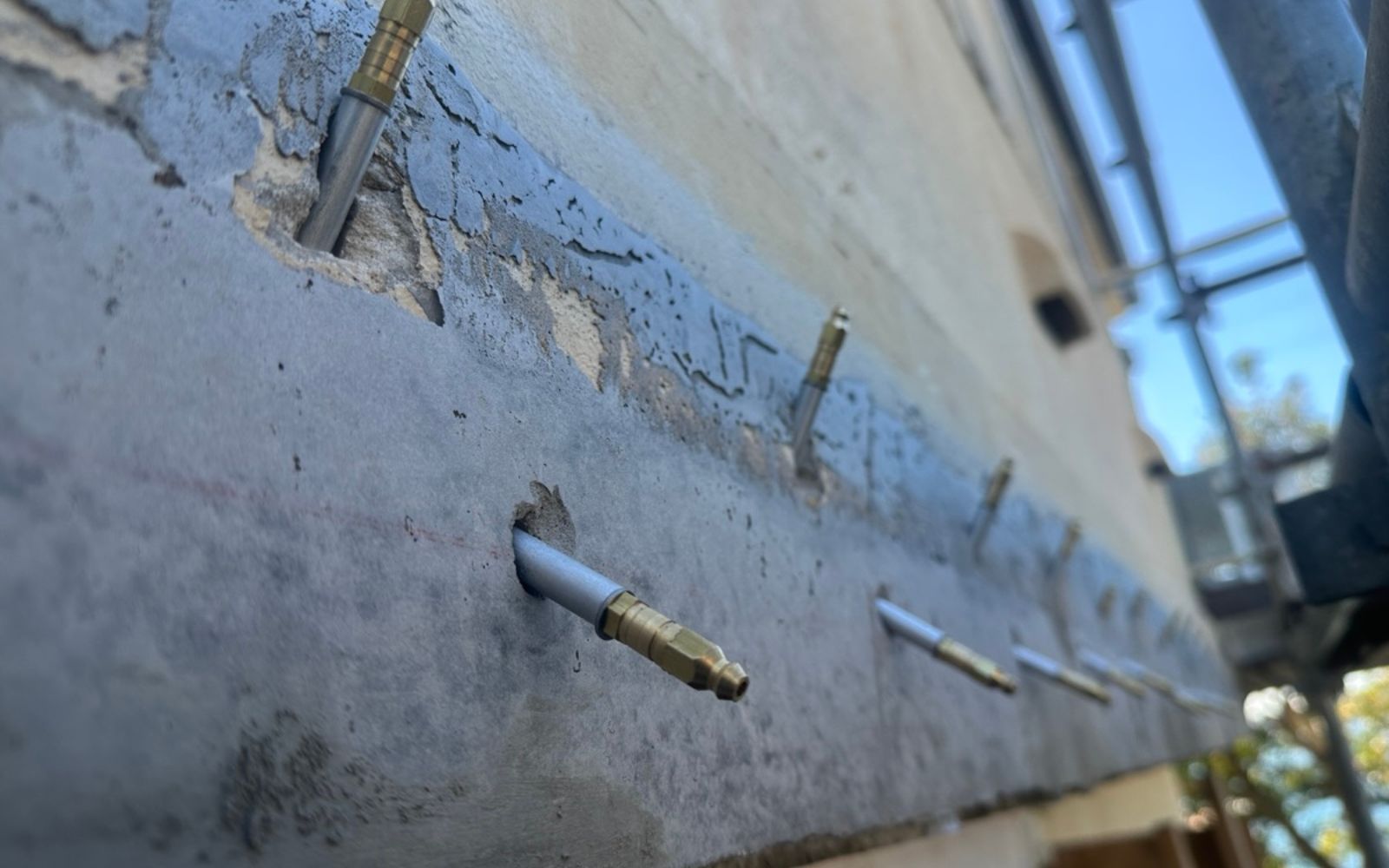
A slab past patching, rebuilt from underneath through core holes in an occupied unit. Galvanic anodes, cold joint injected.
Pacific Hwy — Killara
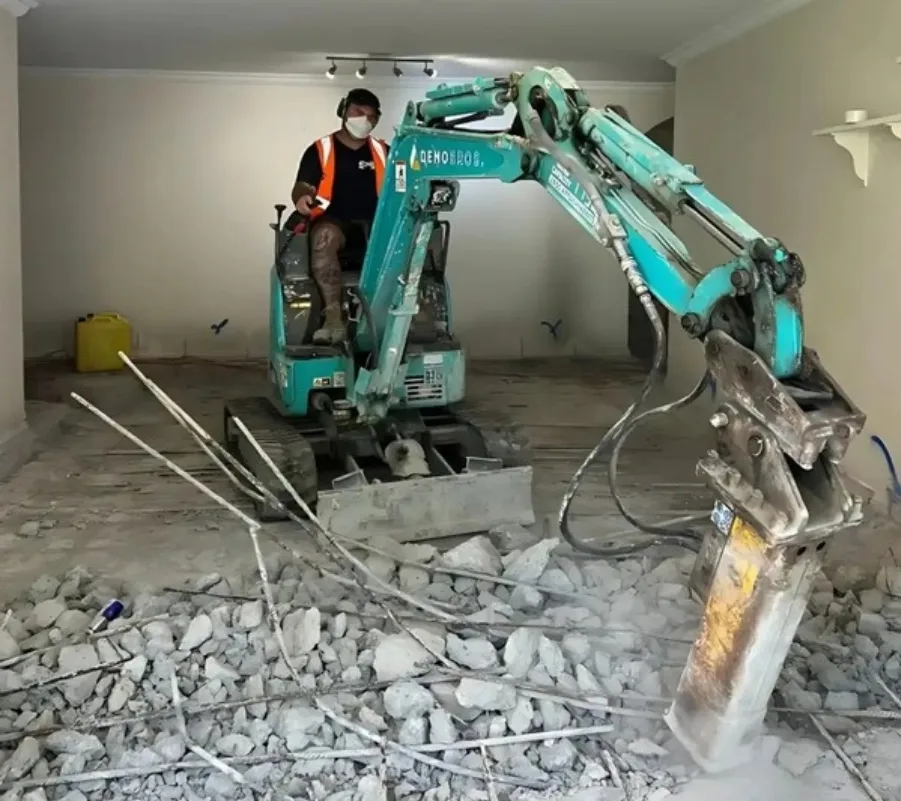
Slab-on-ground under three occupied levels, broken out and reinstated in A-B stages to the engineer's sequence. No residents relocated.
Aussie Concrete Repair vs the contractor who improvises.
Two contractors can price the same specification and deliver very different repairs. Here's the gap that shows up when you come to sign off.
The records you can sign off against — and what to send us.
Signing off a repair you didn't watch is hard without evidence. We hand ours over with the work. Here's what's in it, and what we need from you to price the project.
What we hand over
Handed over for your sign-off — ready to go into your report to the client.
Repair register — every location numbered and measured.
Photos at every stage — before, during and after, for each location.
Scan & hold-point records — scan results before every cut, hold points recorded.
Site discrepancy notices — anything that differs from the report, measured and photographed.
Materials record — the products used, matched to your spec.
Batch & quantity records — what went in, where, and how much.
What to send us
The more of this you have, the faster we can price. Don't have it all? The report and the scope are enough to start.
Your specification or report — or the scope of works, if that's all there is.
Drawings and details — repair details, mark-ups and product schedules.
Hold points — what you want to inspect, and when.
Access & occupancy — who's in the building and when we can work.
Quantities or a schedule — if you have one, so we price like-for-like.
How we price your specification.
Costs depend on the scope, access, quantities and your spec. We price line-by-line to your report so your client can compare like-for-like — the price is confirmed before any work starts.
Concrete repair, spalling and crack injection — priced per m², per lm or per location.
Formwork, reo and repair pours, plus scanning, saw cutting, break-out and removal — priced per m³, per m² or per lm.
Carbon fibre strengthening to your design, protective coatings and joint sealing — priced to the spec.
Every line is priced to your specification — no mystery items, and no “we'll see when we open it up” that your client has to come back to you about.
Check us before you recommend us.
You're putting your name next to ours when you recommend a contractor. Here's what you can verify first.
We'd rather you check than take our word for it.
From specification to started — no mystery.
We're a fit for some projects, not all.
This is for you if…
- ✓You're an engineer, building consultant or defect assessor with a concrete repair specification that needs building.
- ✓You want a contractor who builds to the spec and calls you in at every hold point — not one who improvises.
- ✓The building is occupied or live and the works need exclusion zones and staging.
- ✓You want a repair register handed back — locations numbered, measured and photographed, with materials and batch records.
- ✓You want one contractor for the whole concrete scope your client has to engage.
Probably not us if…
- —You need the repair designed or certified — we build to your design, we don't produce or certify it.
- —Your client wants the cheapest number on the day and the spec treated as a suggestion — that's not how we work.
- —You need someone to manage the whole project for your client — we're the concrete repair contractor.
- —You need a crew cutting today with no spec and no scan — we scan and confirm the scope before we cut.

You'll deal with the people doing the work.
Concrete repair is all we do. Send us your spec and we'll tell you straight what it takes, what we need confirmed and when we can start — then we scan first, build to the spec and hand you the records.
What an engineer will want to know.
Do you build exactly to our specification?+
What happens if site conditions differ from the report?+
How do you handle hold points?+
What records do we get?+
Do you do design or certification?+
Can you price from our specification?+
Are you licensed and registered?+
Can you work in occupied buildings?+
Do you scan before cutting?+
How fast can you start?+
What concrete work do you do?+
Recommend a contractor who builds to your spec.
Send the report, the spec or the drawings. Every enquiry answered within 1 hour.