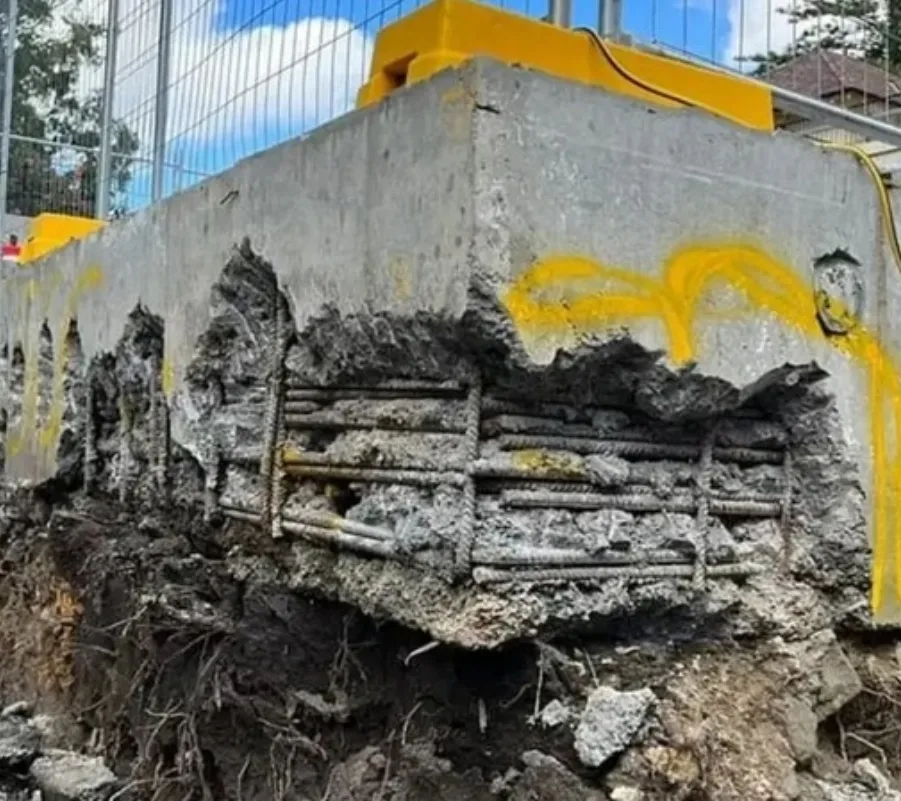
Protective coating applied to repaired concrete on a Sydney building
Home › Services › Protective Coatings & Anti-Carbonation
Protective Coatings & Anti-Carbonation · Sydney

We coat concrete so you don't repair it twice.

Anti-carbonation and protective coating systems applied after repair — so new corrosion doesn't start beside the patch. Surface prep to the system's spec, batch records in the register.

✓ ACRA member✓ Licence 360636C✓ Repair & coat, one crew✓ 1-hour response
1 hr
Response time
7 days
Quote turnaround
2 wks
Typical start after award
ACRA ✓
Member
Get a quote
Tell us about the project. We call back within the hour.
Max file size 10MB.
Uploading...
fileuploaded.jpg
Upload failed. Max size for files is 10 MB.
We call back within the hour. No spam, ever.
Thank you! Your submission has been received!
Oops! Something went wrong while submitting the form.
Start here

What is a protective concrete coating?

Protective coatings slow down the processes that cause concrete cancer, mainly carbonation and chloride ingress. They are applied after repairs to protect the whole surface, so new corrosion doesn't start next to the patched areas. Repair fixes the concrete that has already failed. A coating protects the concrete that hasn't failed yet — the sound surface around every patch, where carbonation and chlorides are still working their way toward the steel.

We apply the coating as the last stage of the repair package: surface prep to the manufacturer's specification, primer, then the system at the specified film build — with batch numbers and areas logged in the repair register so the engineer can sign it off.

Patch vs patch-and-protect — the distinction that decides the result: patch repairs alone fix the spalled spots and leave the rest of the surface carbonating. Patch-and-protect repairs the failures, preps the whole surface and then coats it — so the next round of spalling doesn't start beside the last round of patches. Patch only and you'll likely be back; patch and protect and the repair lasts.
Know the symptoms

6 signs the concrete needs a protective coating.

Concrete tells you it's losing its protection long before it spalls. If you can see any of these, carbonation or water is already working toward the steel.

1
Fresh spalling beside old patchesNew breakouts next to previous repairs — the surrounding surface was never protected, so corrosion moved next door.
2
Rust staining on the surfaceBrown streaks or spots mean the reinforcement is already corroding under the cover concrete.
3
Hairline cracking and crazingFine surface cracking opens a direct path for water, CO₂ and chlorides into the concrete.
4
Failed or chalking old coatingsPeeling, blistering or chalking coatings have stopped protecting the concrete underneath.
5
Efflorescence and damp patchesWhite salt deposits or persistent damp mean water is moving through the concrete.
6
Coastal or carpark exposureSea air, road salts and vehicle exhaust speed up chloride ingress and carbonation — these surfaces need protecting first.
⚡ Concrete falling from a soffit or edge? Treat it as a safety risk and call us now.
Why it matters now

Uncoated concrete is a repeat repair waiting to happen.

Repairing spalls without protecting the surface around them is how a one-off repair becomes a recurring line item on the program.

01

Repeat breakouts

Patches fix the failed spots, but the untreated concrete next to them keeps carbonating. Without a coating, the next spalls start right beside the last repairs.

02

Program and cost risk

Coming back to a finished building means re-access and re-mobilising — every return trip costs more than the coating would have.

03

Handover & sign-off

The engineer's spec often calls for a protective system after repair. Leave it off and the repair package isn't complete.

Our approach

Prep the surface, then protect it.

A coating is only as good as the surface under it. We repair first, prep to the system's spec and apply the coating last — logged area by area.

1

Confirm the specified system

We start from the engineer's specification and the repair scope — the coating system, film build and surface prep are confirmed before a price is quoted, so the scope matches the spec.

2

Finish the repairs first

Spalls broken out and reinstated, cracks dealt with by crack injection and failed joints by joint sealing — the coating goes over sound concrete, not over defects.

3

Prep to the manufacturer's spec

Grind or blast the surface to the profile the system needs, blend the patch repairs and remove any failed toppings or coatings. Prep is where most coating failures start, so we don't rush it.

4

Coat, record, hand over

Primer and protective system applied to the specified film build, with batch numbers and areas logged in the repair register your engineer signs off.

What's covered

The coating work we do.

Protection matched to the exposure and the engineer's spec — on its own or as the final stage of a repair package.

Anti-Carbonation & Protective CoatingsSlow carbonation of the cover concrete so the steel stays protected — the standard finish after soffit, edge and facade repairs.Read more →
Penetrating Sealers & Water RepellentsImpregnating treatments that cut water and chloride ingress without changing the look of the concrete.Read more →
Surface Prep & Coating RemovalGrinding and blasting off failed coatings and laitance so the new system bonds to sound concrete.Read more →
Patch & Protect PackagesConcrete cancer repairs and the protective coat delivered by one crew — no hand-off between trades.Read more →
Soffits, Balconies & EdgesThe exposed elements where carbonation and spalling show up first — coated after repair, accessed to suit the site.Read more →
Carparks, Podiums & RampsChloride-exposed slabs and columns protected so salts and water stop reaching the reinforcement.Read more →
Why Aussie Concrete Repair

Why our coatings don't come back as repairs.

The cheap quote rolls paint over the patches and leaves. Here's what protecting concrete properly means for your program.

What matters
Aussie Concrete Repair
Typical contractor
Specification
✓ System and film build confirmed first
× Paints over whatever's there
Surface prep
✓ Prepped to the manufacturer's spec
× Coats over laitance and old paint
Sequencing
✓ Repairs finished before the coat
× Coats over open defects
One crew
✓ Repair, prep & coat in-house
× Separate trades, gaps between them
Records
✓ Batch numbers in the repair register
× No QA trail
Our work

Recent work, with the numbers.

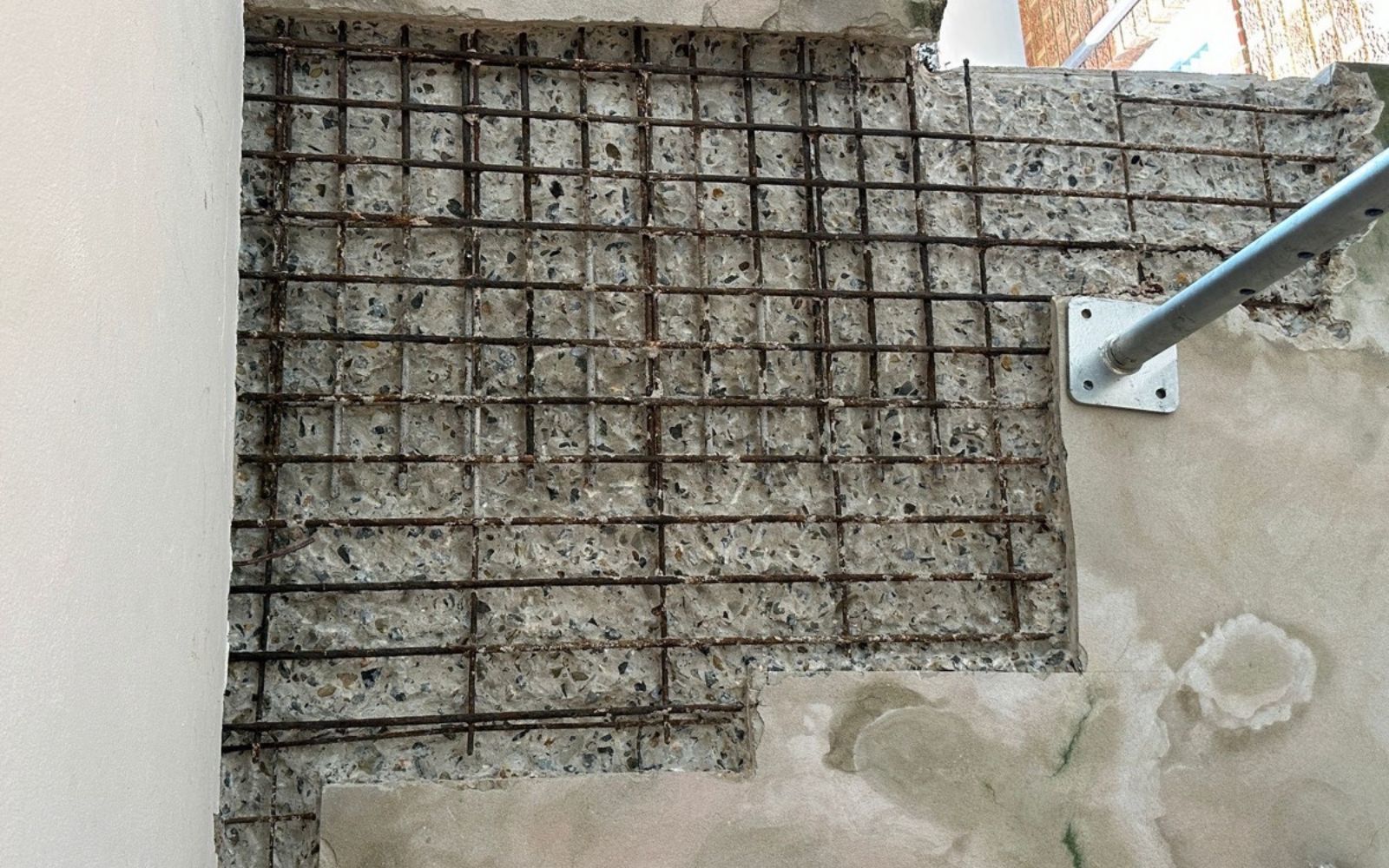
Concrete spalling repair, Coolong Rd, VaucluseSpalling repair

Coolong Rd — Vaucluse

Honeycombed pour and corroding reinforcement broken back, treated, rebuilt and coated.
$50KValue
2 wksDuration
Owners CorpClient
View project →
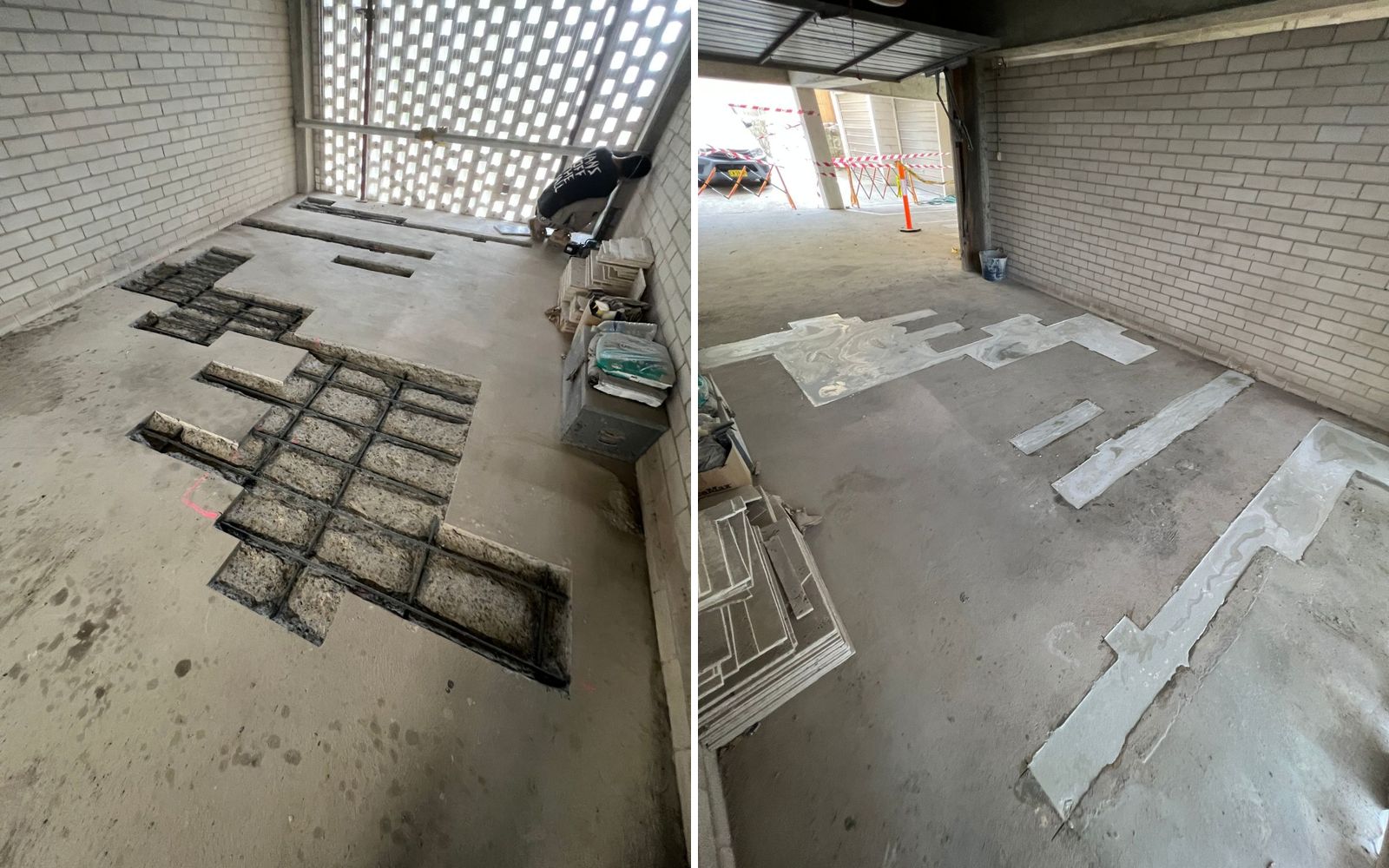
Stair soffit concrete repair, Laycock Ave, CronullaSoffit repair

Laycock Ave — Cronulla

Stair soffit repaired with Sika MonoTop, formed and poured from above in an occupied building.
$45KValue
4 wksDuration
RemedialClient
View project →
Carbonation concrete repair, Birrell St, TamaramaCarbonation repair

Birrell St — Tamarama

About 1,000 litres of carbonation repairs plus new crash barriers, staged so the carpark stayed open.

$100KValue
3 mthsDuration
StrataClient
View project →
Risk reversal

Coated to spec. Verify everything.

Most coatings fail because the surface under them was never repaired or prepped. We repair it, prep it, coat it and record it.

✓
Applied to the specified systemPrep, primer and film build to the manufacturer's and engineer's spec — not rolled on and hoped to hold.
✓
NSW Licence 360636C · ACRA memberVerify us on the NSW Fair Trading register before you call. We'd rather you check.
✓
Repair & coat in one crewNo hand-off between the repair trade and the painter — one crew owns the result.
✓
Recorded in the repair registerAreas, batch numbers and photos your engineer and certifier can audit at any stage.
We'd rather you check than take our word for it.
What happens after you enquire

From first call to fixed quote — no mystery.

1
You enquire

Send the engineer's spec or repair scope, or describe the surface and what's failing.

Within the hour
2
Site check

We look at the substrate, the exposure and the access to confirm the prep and the system.

Days, not weeks
3
Fixed-price scope

A documented scope, priced per m², your engineer can check.

Quote within 7 days
4
Prep and coat

Prepped, coated and recorded area by area, around the other trades.

Start about 2 weeks after award
Is this you?

We're a fit for some projects, not all.

We'd rather tell you upfront than waste your program time.

This is for you if…

  • You're a head contractor or builder with concrete that needs protecting after repair.
  • You have an engineer's spec calling for an anti-carbonation or protective system.
  • The site is live or occupied and works need to be staged around other trades.
  • You need batch records and a repair register your engineer can sign off.
  • You want the repairs and the coating done by one crew.

Probably not us if…

  • You want concrete painted with no prep and no repair underneath.
  • You're after the cheapest roll-over to get through an inspection.
  • It's decorative painting, not concrete protection.
  • You need it coated this week without checking the substrate — we confirm the prep before we price.
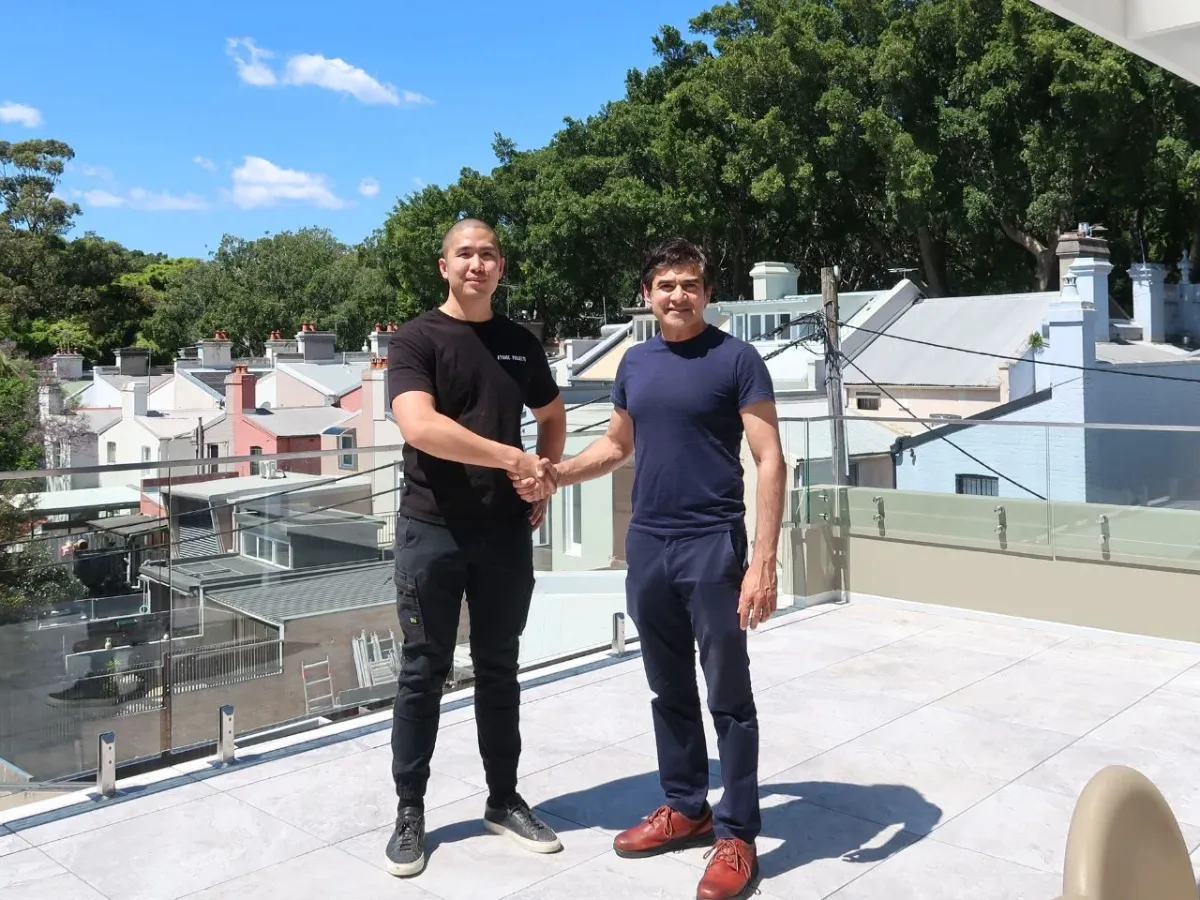
Aussie Concrete Repair crew lead on a Sydney concrete repair site
Who you're dealing with

You'll deal with the crew lead, not a call centre.

Coating is the easiest thing to quote cheap and the easiest to get wrong. We finish the repairs, prep to the system's spec and coat last, so the protection works. Send me the spec and I'll tell you straight what it takes.

— Ben Tran, Founder, Atomic ProjectsNSW Licence 360636C · ACRA member
Straight answers on price

What protective coatings cost in Sydney.

Protective coatings are priced per square metre. These are our current rates, ex GST.

Rate
$100–$180 / m²

Per m² of coated surface, to the specified system.

Minimum project
$10,000

The smallest coatings project we take on, ex GST.

Your exact number
Free estimate

Run your quantities through our cost estimator, or send the spec for an itemised quote within 7 days.

Indicative only. Final price confirmed after a site look and the engineer's specification. Prices ex GST.

Send us the project.

Send the spec or photos and we'll confirm the system, the prep and a fixed price per m². We call back within the hour and send an itemised quote within 7 days.

Get a quote
Tell us about the project. We call back within the hour.
Max file size 10MB.
Uploading...
fileuploaded.jpg
Upload failed. Max size for files is 10 MB.
We call back within the hour. No spam, ever.
Thank you! Your submission has been received!
Oops! Something went wrong while submitting the form.
Common questions

What head contractors ask us about coatings.

Why coat concrete at all after repairing it?+
Because the repair only fixes the concrete that has already failed. The sound surface around each patch is still carbonating and taking on chlorides, and that's where the next spalls start. A protective coating over the whole area — after concrete cancer repairs and crack injection — slows that process so the repair lasts.
Which coating system do you use, and who warrants it?+
The system the engineer specifies. We apply it to the manufacturer's requirements — prep, primer, film build and cure — and record batch numbers and areas in the repair register. Our work is backed by a 10-year written warranty.
How long does prep take compared with the coat?+
Usually longer than the coat itself. Grinding or blasting, cleaning, blending the patch repairs and letting them cure to the system's requirements is where the time goes — and where most coating failures start if it's rushed. The site check confirms the prep before we give you a program.
Can you colour-match the existing concrete or facade?+
Most anti-carbonation systems can be tinted, so the finish can be matched to the existing concrete or one uniform colour across the elevation. Penetrating sealers don't change the look of the concrete. We confirm the options for the specified system before you approve the scope.
How long until it needs recoating?+
It depends on the system, the exposure and the film build — the manufacturer's data sheet sets the expected life, and coastal and carpark concrete wears faster. Send us the spec and we'll include the recoat cycle in the scope so you know what to plan for.
Can you work around other trades on a live site?+
Yes. Coating is staged area by area around the program — we prep and coat zones as they become available, protect adjacent finishes and keep access open for the other trades. Typical start is about 2 weeks after award.
Do you do the repairs as well as the coating?+
Yes — that's the point. One crew breaks out and reinstates the spalls, injects the cracks, reseals the joints and applies the coating, so there's no hand-off between trades and no gap in responsibility.
Are you licensed?+
Yes — NSW contractor licence 360636C, ABN 53 627 550 323, and ACRA member. Verify us on the NSW Fair Trading register before you call. About us →
How much do protective coatings cost in Sydney?+
Coatings are priced per m² — currently $100–$180 per m² ex GST, with a $10,000 minimum project. The system, the surface prep and access move the rate. Send the spec or photos and we'll send an itemised quote within 7 days. Indicative only — final price confirmed after a site look and the engineer's specification.

Protect the concrete once — don't repair it twice.

Repairs finished first, surface prepped to spec, coated last and recorded in the register. Call 0410 515 509 or send us the project.

Get a quote →
or call 0410 515 509
No obligation. We call back within the hour.
📞Get a quote →
Call NowGet a quote →