

What carbonation does, when engineers specify anti-carbonation coatings after repairs, coating vs sealer, prep and recoat cycles. For Sydney builders.
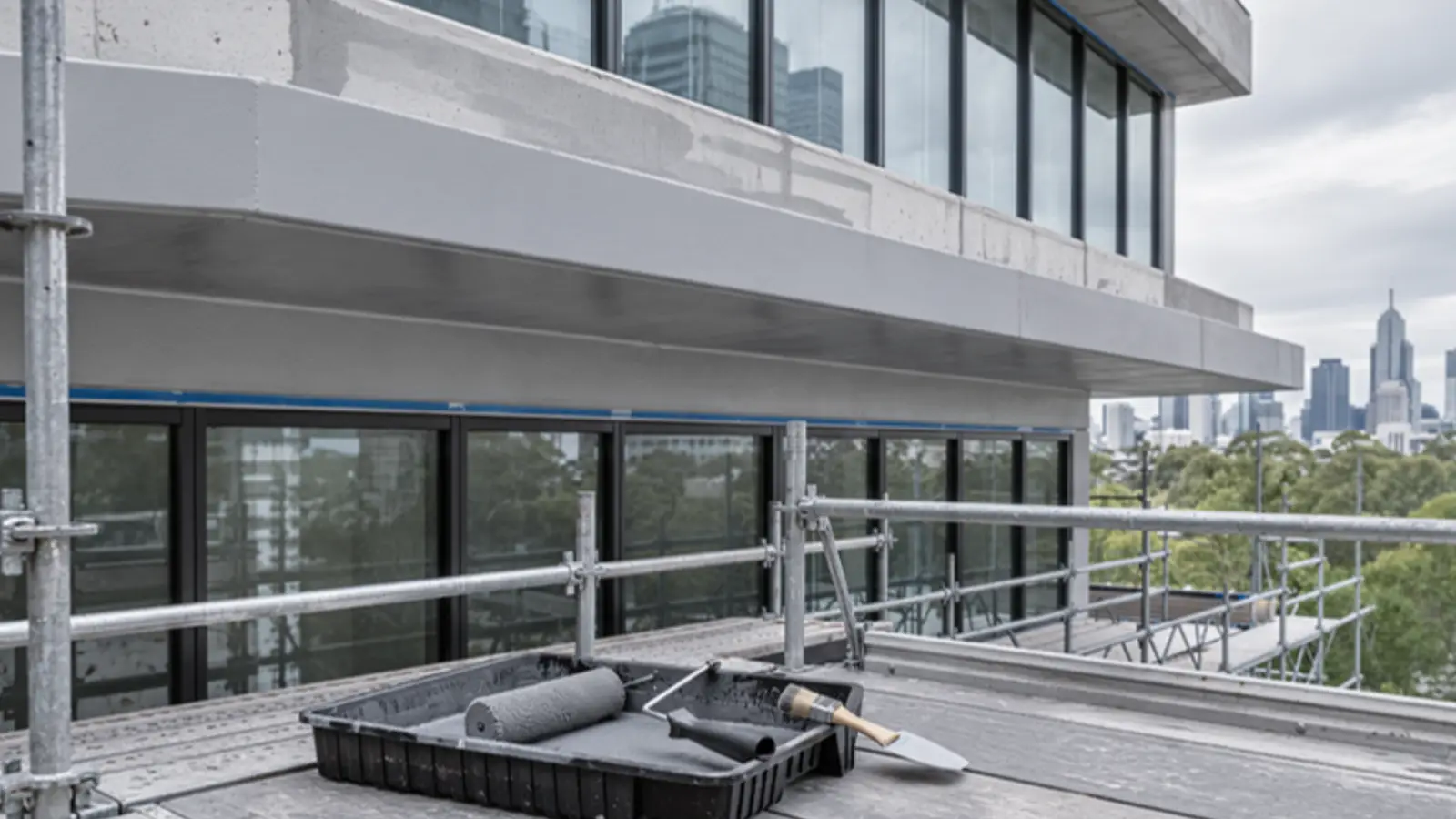
An anti-carbonation coating is a thin, breathable film that slows carbon dioxide getting into concrete, so the steel stays protected after a repair. Engineers often specify one over patched areas and the surrounding concrete because the original concrete is still carbonating. Prep, the right system and a planned recoat cycle are what stop you repairing twice.
Fresh concrete is highly alkaline, and that alkalinity keeps a thin protective layer on the reinforcement. Carbon dioxide from the air slowly diffuses into the concrete and reacts with it, lowering the alkalinity from the surface inwards. When that carbonation front reaches the steel, the protective layer breaks down. Add moisture and oxygen and the steel corrodes, expands and pushes the cover off. That's the spalling builders call concrete cancer.
Carbonation is slow, but it's faster where cover is thin, the concrete is porous or cracked, or the element cycles between wet and dry. On older Sydney buildings, carparks and podiums it's a common cause of the damage that ends up in a concrete cancer repair scope.
A patch repair replaces damaged concrete with fresh, alkaline repair mortar at the spots that have already failed. The concrete around those patches is the same age as the bits that failed and has often carbonated close to the steel too. Leave it bare and the next set of spalls appears beside the last lot.
That's the problem coatings address. They don't reverse carbonation that has already happened. They slow further carbonation and water ingress so the remaining concrete, and the repairs, last longer.
The coating decision belongs to the engineer, based on their investigation. You'll typically see one specified when:
The specification should name the coating system or a performance requirement, the extent, the preparation and the number of coats. If it doesn't, ask before you price, because "coat as required" can mean very different scopes.
These get confused often, and they do different things.
Film-forming coatings, often elastomeric acrylics, that sit on the surface. They're designed to resist carbon dioxide diffusion while still letting water vapour out, so moisture doesn't get trapped behind them. Elastomeric types can bridge fine cracks. They change the look of the surface, which is why colour matters.
Silane or siloxane water repellents that soak into the pores and line them, leaving little or no visible film. They're strong at keeping out water and the chlorides carried in it, and they keep the natural concrete look. On their own they don't provide the same resistance to carbon dioxide that a dedicated anti-carbonation coating does.
Some specifications use both: a penetrating sealer first, then an anti-carbonation coating, or a sealer on one exposure and a coating on another. Follow the spec and use one manufacturer's compatible system.
Coatings fail at the bond, and the bond is made in the prep. A typical sequence is:
Film thickness matters. Too thin and it won't give the protection it's rated for. Wet film checks during application, recorded on the day, are the simplest evidence that it went on right.
Coatings are pigmented, so they can even out the patchwork of repair mortar and old concrete, which clients usually like. If the building has an existing colour, sample panels on site and sign-off before full application avoid arguments later. Approve colour on the building in daylight, not from a chart.
No coating lasts forever. UV, weather and abrasion wear it down, and its protection reduces as it does. The coating manufacturer states an expected life and recoat approach, and that should go into the building's maintenance plan with an inspection interval. Recoating a sound, well-bonded coating is a light task. Leaving it until it's failed means stripping back and, often, more repairs.
Coating projects are priced on area, access (scaffold, swing stage, boom lift or rope), the amount of prep and old coating removal, the system and number of coats, and working-hour limits. Send the engineer's report and specification, elevations or marked-up drawings showing extent, and photos. If repairs and coating are in the same scope, pricing them together keeps sequencing and access under one subcontract.
That's the engineer's call. Repairs fix where it has failed. If testing shows the surrounding concrete is close to failing too, the coating is what stops the next round of repairs.
Only once the repair mortar has cured to the coating manufacturer's requirements. Coating too early can trap moisture and cause blistering or poor bond.
A pigmented coating usually evens out the colour well. Texture differences between patches and original concrete can still show, so prep and filling matter if appearance is important.
Yes. We stage areas, manage overspray and access, and work to the hours the site allows. Records and a repair register come back to you at the end.
Aussie Concrete Repair is an ACRA member with NSW licence 360636C, and we apply the system the engineer specifies. You get a 1-hour callback and an itemised quote within 7 days. Email quotes@aussieconcreterepair.com.au or call 0410 515 509. More on the service: concrete protective coatings.
Send photos, the engineer's spec or drawings, or just the symptoms — whatever you've got. The crew reads it and calls you back. No call centre, no obligation.