What spalling and concrete cancer actually are
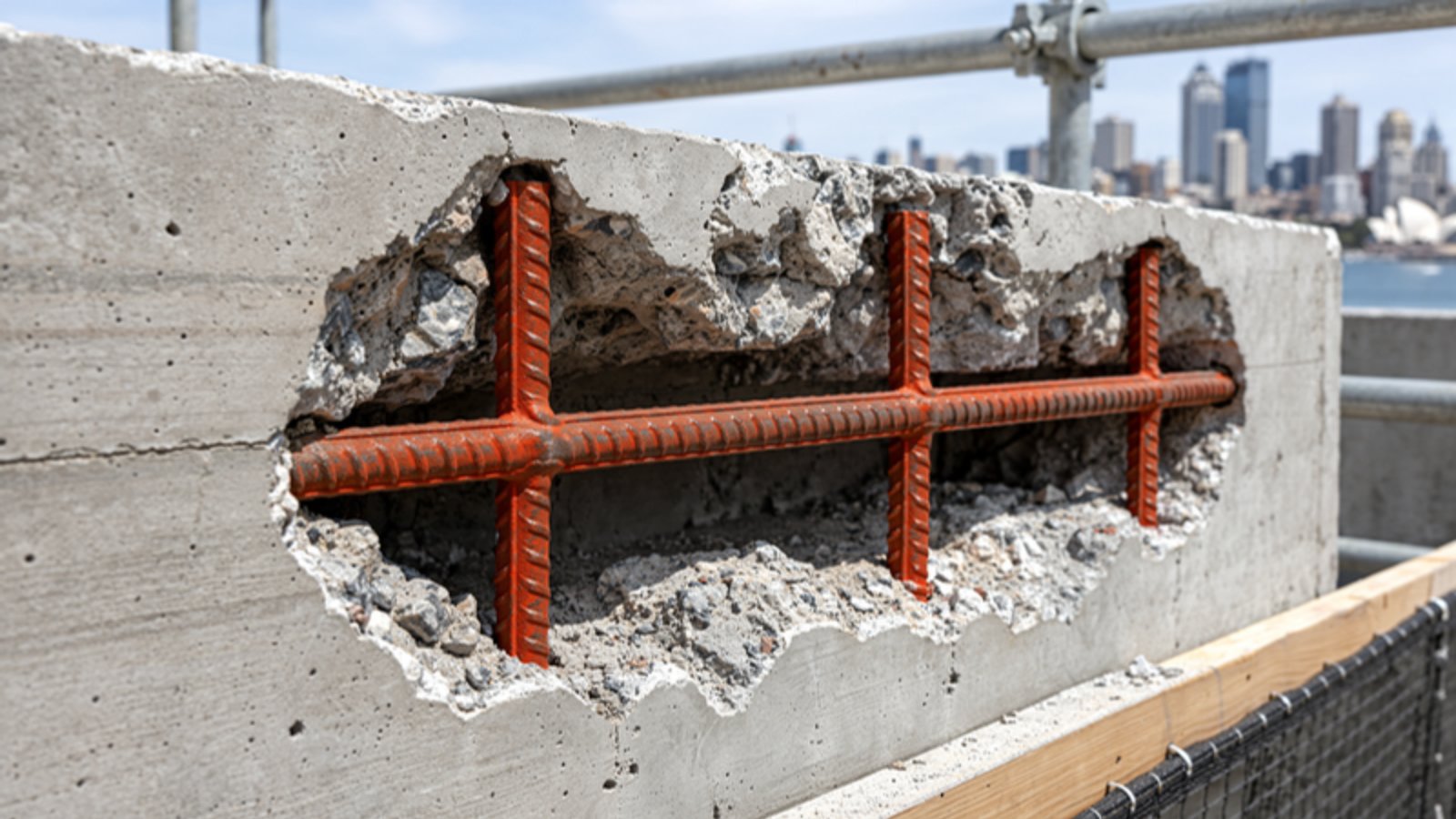
"Concrete cancer" is the trade name for corroding reinforcement. Concrete normally protects the steel inside it. Once that protection is lost — through carbonation over the years, or chloride attack from sea air or the original mix — the bar starts to rust. Rust takes up more room than steel, so it pushes the concrete off the bar. That is the spall you see on slab edges, soffits, columns and nosings.
How we repair it
- Mark out and break out. We cut back past the visible damage until we reach sound concrete and clean steel behind the bar — not just the loose surface.
- Treat or replace the steel. Reo is cleaned and primed, or replaced and lapped where it has lost section, to the engineer's direction.
- Reinstate to profile. The specified repair mortar goes back formed, sprayed or hand-placed, to line and level.
- Log it. Every location is measured and photographed so the engineer can close it out without re-opening areas.
Why skimming over it fails
A skim coat hides the flaking surface but leaves the rusting bar underneath. The corrosion keeps working and the new finish lets go — usually after the defects period, and usually on your name. Breaking out to the steel is what stops it.
Questions builders ask
Who decides between patch repair, anodes or coatings?
The engineer. Those are design decisions. We build to the specification and flag anything on site that doesn't match the engineer's assumptions — for example, more corrosion at breakout than the survey showed.
Can you work around a live or occupied site?
Yes. We set exclusion zones and overhead protection around drop areas and stage the noisy breakout to suit the building and your program.
How do I stop it coming back?
Repair the cause, not just the spall. Where the engineer specifies it, protective and anti-carbonation coatings go over the finished repairs so the next round doesn't start.
Related repairs
Spalling is one part of concrete cancer and spalling repair. See also carbonation repair, chloride attack repair and honeycombing and pour defect repair. Cracks that need bonding or sealing go to crack injection.
Send us the engineer's report or photos — we call back within the hour.