What carbonation does to concrete
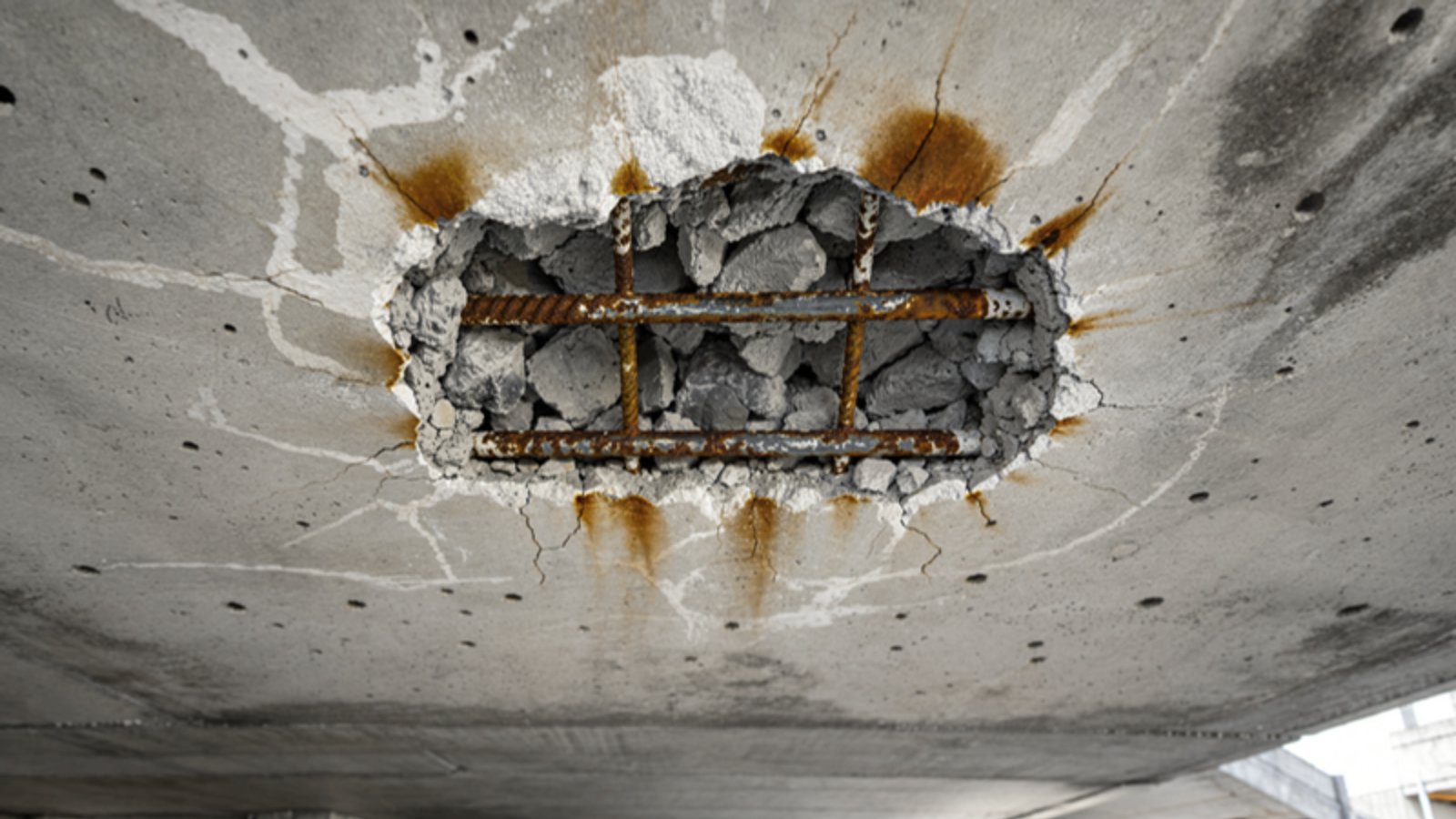
New concrete is highly alkaline, and that alkalinity keeps the steel inside it passive. Over years, carbon dioxide from the air works in from the surface and lowers it. When that carbonated zone reaches the reinforcement, the steel can start to rust — and rust leads to cracking and spalling. Thin cover, porous concrete and older buildings carbonate soonest.
Signs it's happening
- Rust staining bleeding through the surface.
- Fine cracks running along the line of the bars.
- Drummy or delaminated patches on soffits, edges and columns.
- Bars showing where cover has been lost.
How we handle it
The engineer's report sets the scope and the depth of repair. We build to that spec:
- Break out affected concrete back to sound material behind the steel.
- Treat or replace the reo as directed.
- Reinstate with the specified repair mortar, to profile.
- Coat — where specified, an anti-carbonation coating over the repaired and surrounding concrete to slow carbonation from restarting.
- Record every location with measurements and photos for close-out.
Questions builders ask
Can you test carbonation depth?
Testing and diagnosis sit with the engineer — their report tells us where and how deep to repair. If what we find at breakout doesn't match the report, we stop and flag it before going further.
Is a coating enough on its own?
Not where carbonation has already reached the steel. Coatings slow the process on sound concrete; corroding reo still needs to be broken out and treated first.
Related repairs
Part of concrete cancer and spalling repair. See also chloride attack repair, spalling repair and honeycombing and pour defect repair.
Send us the spec or photos — we call back within the hour.