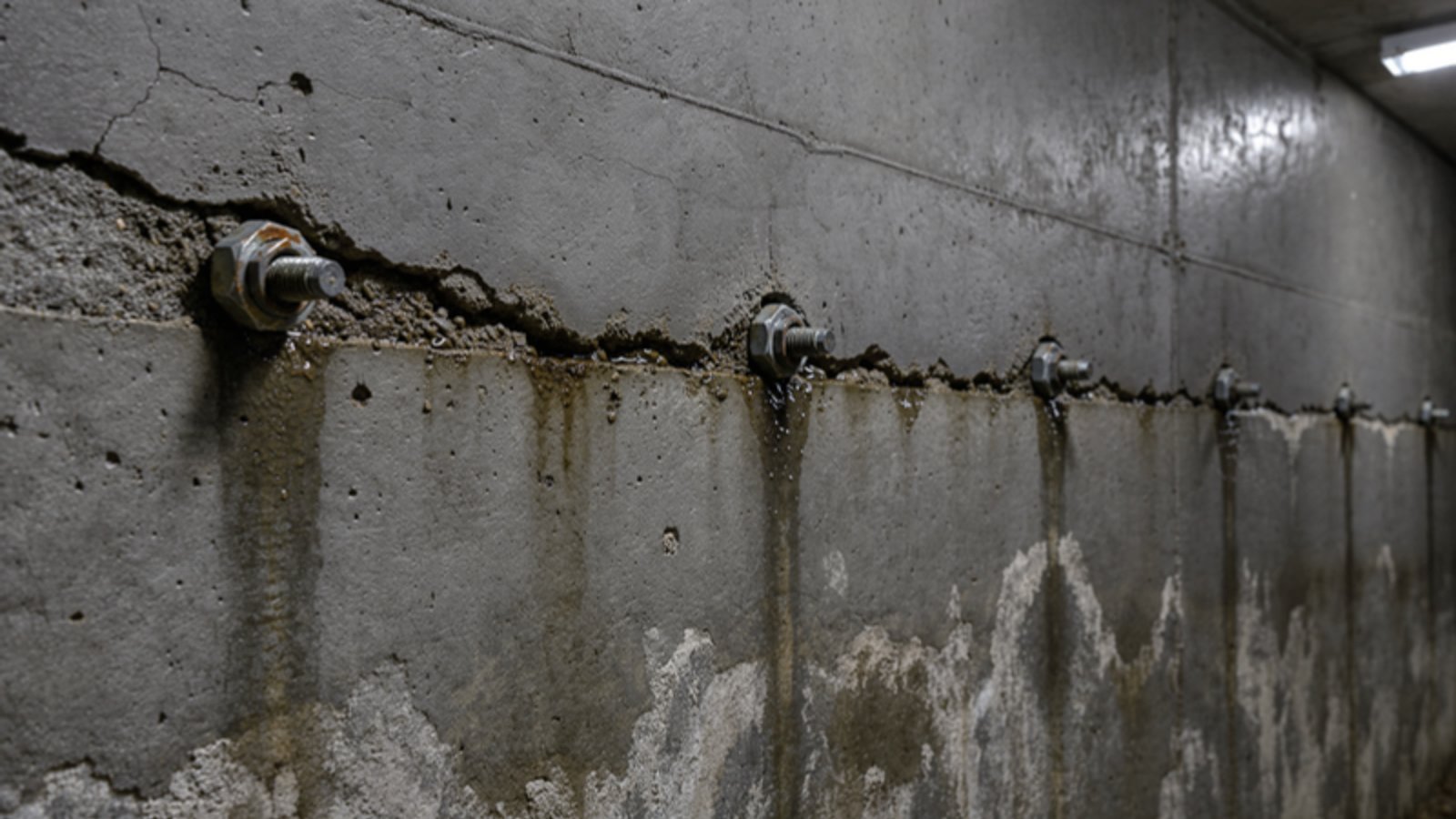
Why leaking cracks need sealing now
Water through a slab or wall crack carries chlorides to the steel, and it doesn't fix itself. A crack that leaks today is a defect on your handover list tomorrow — and, left long enough, a concrete cancer project. Injecting it while it's still a lineal-metre repair keeps it small.
How polyurethane works
Polyurethane reacts with the water in the crack, expands to fill it and stays flexible, so it seals against water even with some ongoing movement. It isn't a structural repair — where the crack also needs to carry load, the engineer will specify structural epoxy.
How we do it
- Map and number the leaking cracks — see crack mapping.
- Port and inject from the lowest port up until resin shows at the next.
- Log each crack — location, length, resin and date — for the engineer and your handover file.
Questions builders ask
Is this structural?
No. Polyurethane seals against water but isn't a structural repair. A surface fill is cosmetic only — and we don't sell it as anything else.
Can you stop an active leak holding up the next trade?
Call us — we respond within the hour and can program the injection around the trades stacked behind it.
Can you work around other trades?
Yes. Injection is a small-footprint task — a pump, the resin and a small crew — so it fits between your trades and around your program.
Related work
Part of crack injection. See also structural epoxy injection, crack mapping and the crack register. Spalling around a crack goes to concrete cancer repair; movement joints go to joint sealing.
Send us the report, crack schedule or photos — we respond within the hour.