When epoxy is the right resin
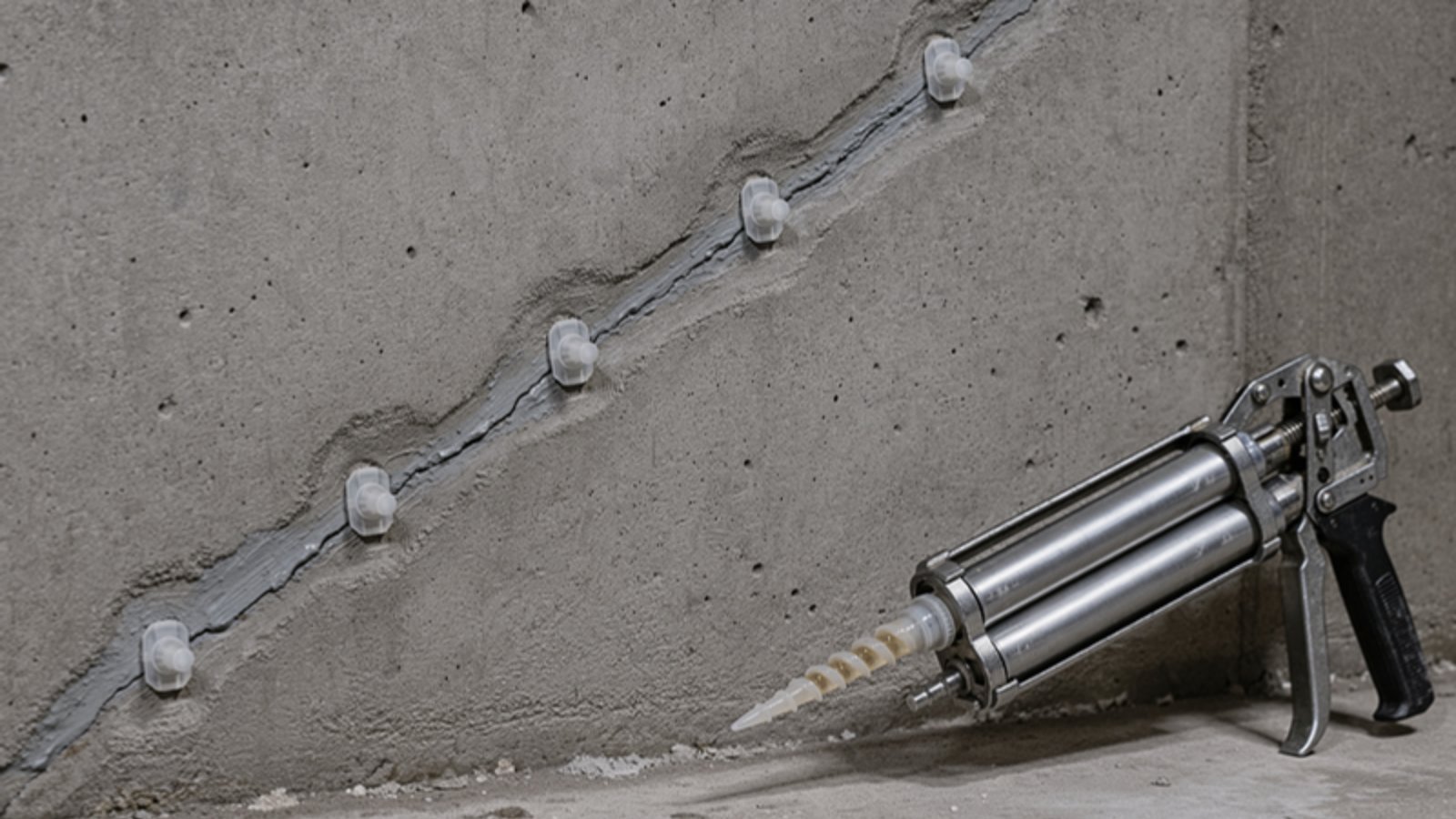
Epoxy is structural. It suits cracks that are dry and dormant — no longer moving — where the element has to carry load again. Injected through the full depth, low-viscosity epoxy restores the bond across the crack. It is not the answer for a crack that's still moving: rigid epoxy in a live crack lets go beside or through the repair.
How we inject
- Map and number the crack, and check it for moisture and movement — see crack mapping.
- Surface-seal and port along the crack.
- Inject under pressure, port by port — from the lowest port up until resin shows at the next, so the crack fills through its depth instead of being capped.
- Log it — location, length, resin and date on the crack register for the engineer.
Questions builders ask
Who decides epoxy or polyurethane?
The engineer's specification. Where there isn't one, we tell you which the crack needs and why. Leaking cracks usually need polyurethane instead.
How long does each crack take?
Most cracks take two visits: one to surface-seal and port, one to inject once the seal has cured. On bigger runs we work through the cracks in sequence.
Will it come back?
Not if the right resin goes into a dead crack. If a crack is still moving, we tell you and the engineer before we inject, not after it reopens.
Can you work around other trades?
Yes. Injection is a small-footprint task — a pump, the resin and a small crew — so it fits between your trades and around your program.
Related work
Part of crack injection. See also polyurethane leak sealing, crack mapping and the crack register. Spalling around a crack goes to concrete cancer repair; movement joints go to joint sealing.
Send us the report, crack schedule or photos — we respond within the hour.